In the DivaBot post I argued that a model alone is not an assistant; it is a function you call, and the engineering around it is yours. Then I kept going and built an entire fleet.
Several agents across two machines, each from a different vendor, each with its own storage format. They run 24/7 and they do real work: code reviews, PRs, experiments, pentests, even this website.
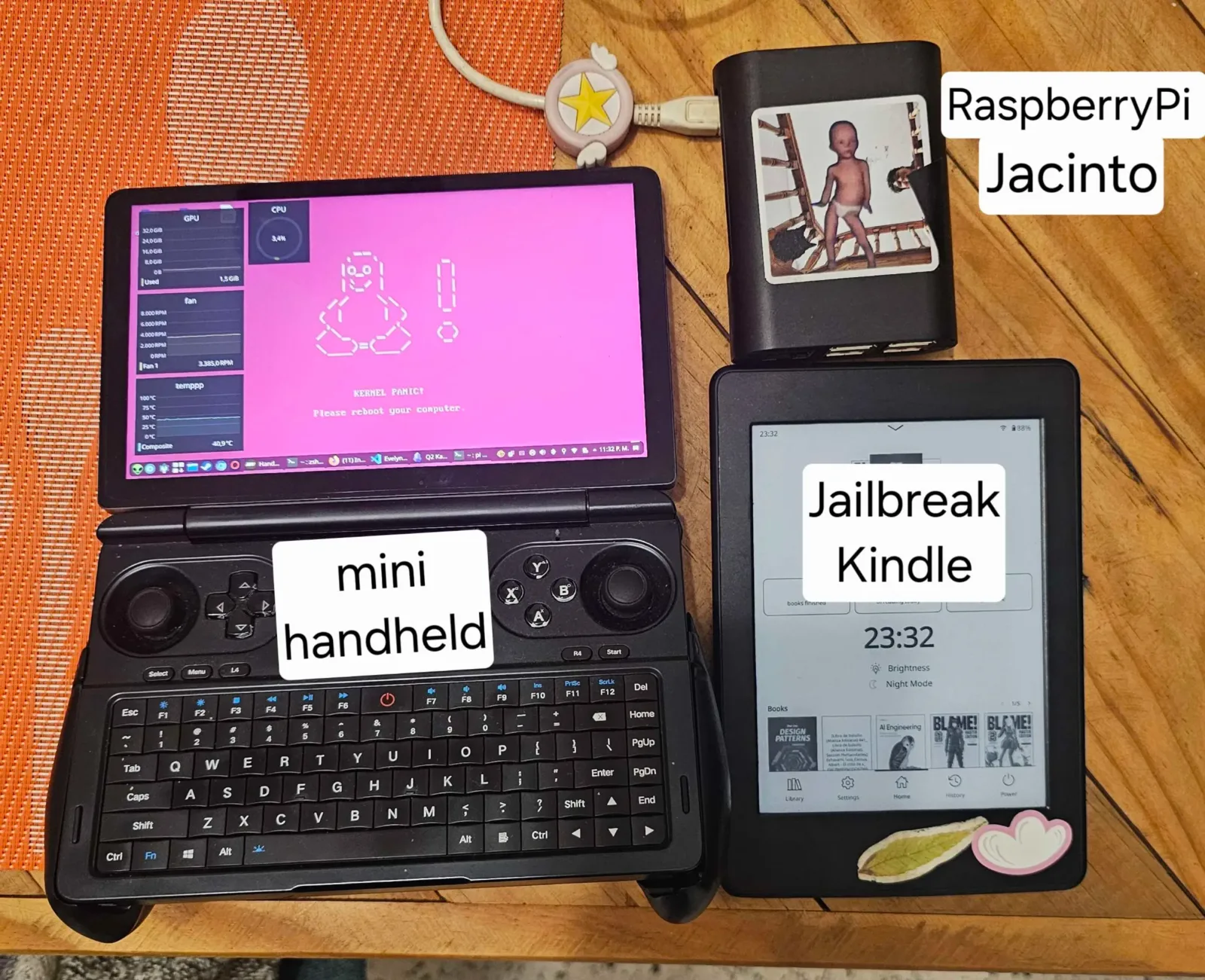
- Mini: the handheld PC that runs the orchestrator, Hermes, and the coding agent, Pi.
- Jacinto: a Raspberry Pi that runs a second Hermes and acts as my ops console for everything I host there.
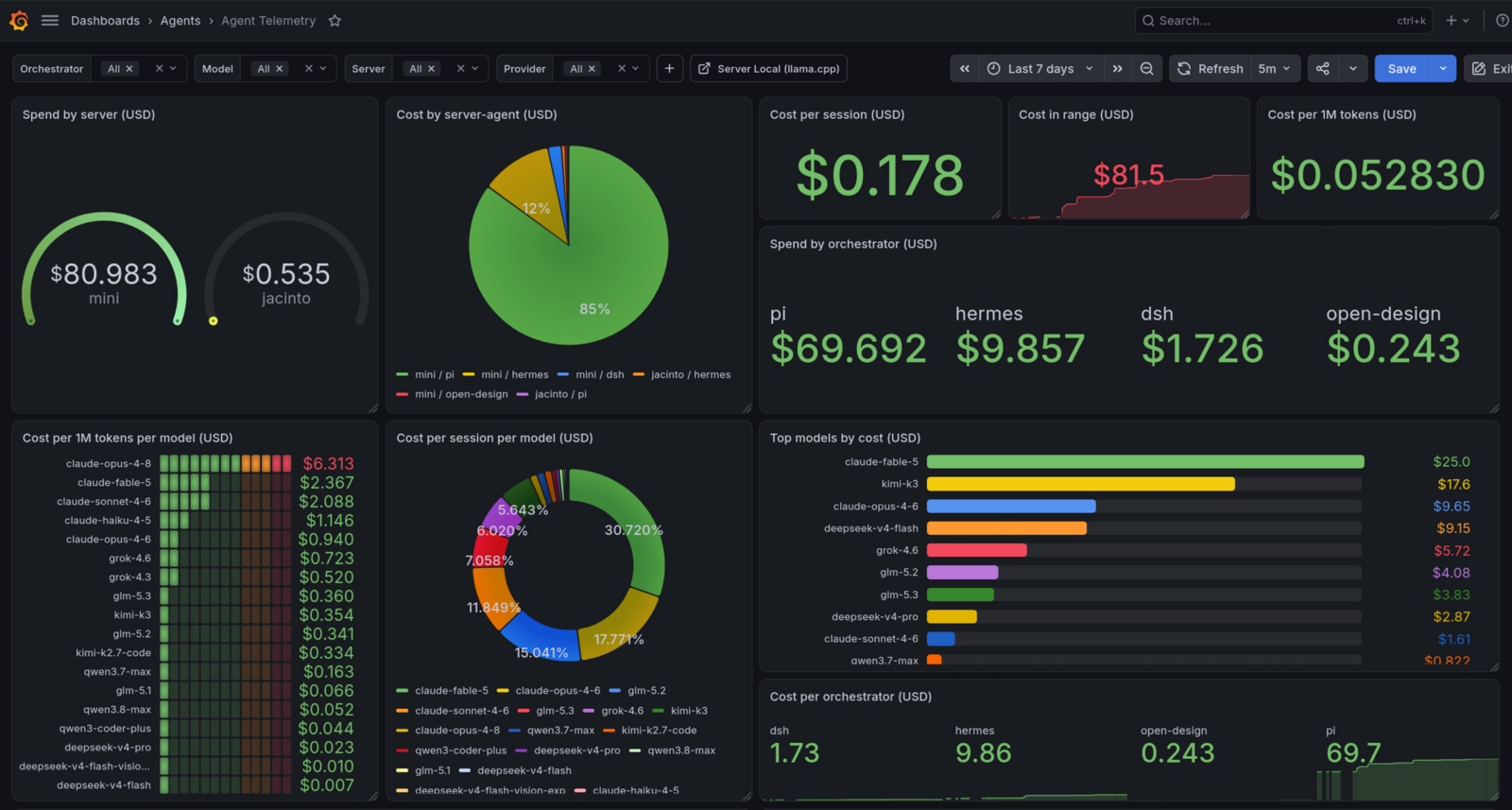
I could tell you what my agents do. I could not tell you what they cost. So I built telemetry for them. This is not AI psychosis. It is architecture.
The fleet
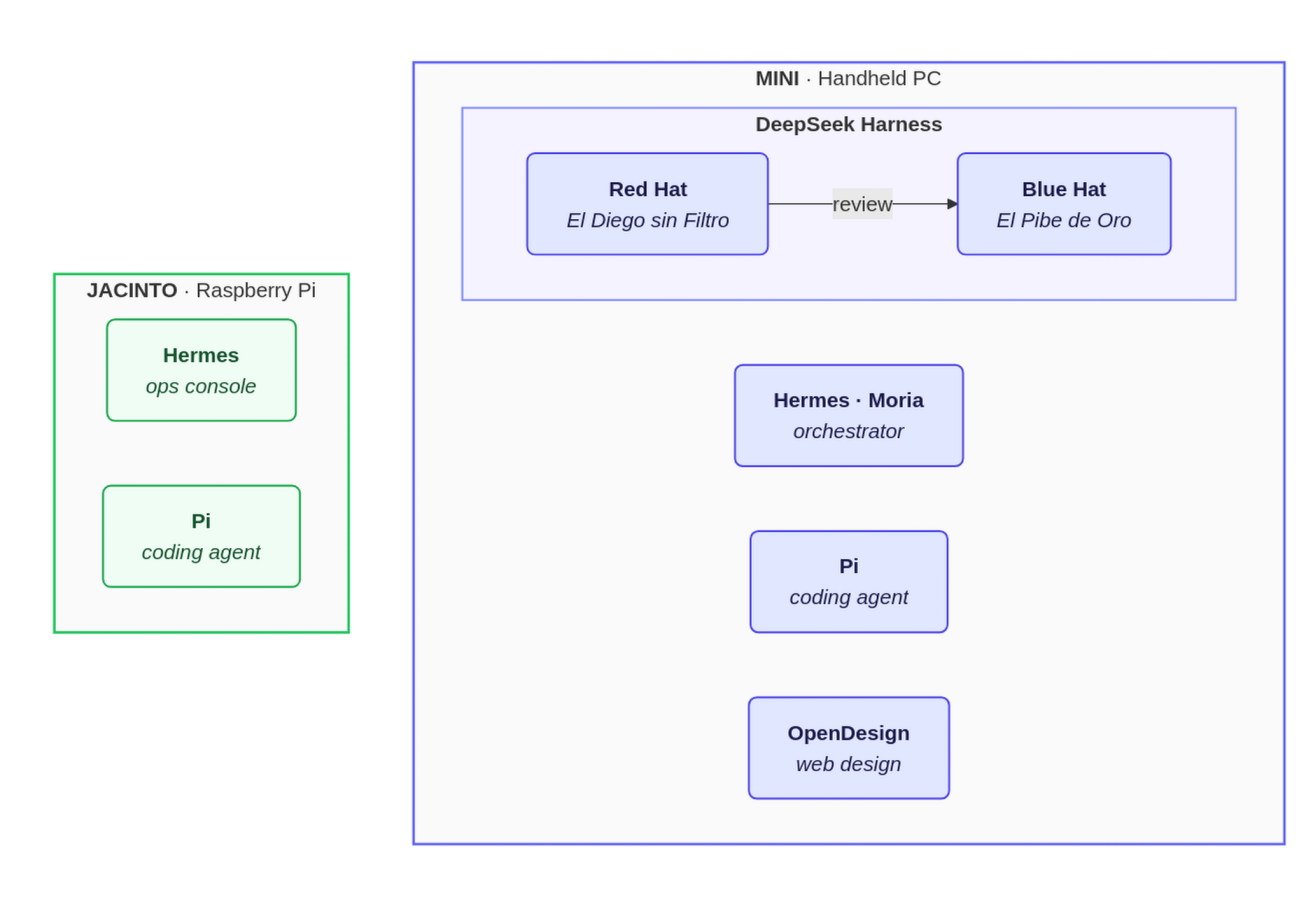
The agents are heterogeneous on purpose, and they all have names: after the orchestrator started talking to me like Moria Casán, it began calling them "Divos". This is everyone:
- Hermes in Mini: the orchestrator brain, my Moria. It plans, routes, reviews and verifies, and it talks to me like a diva. Main drive: DeepSeek v4 Flash.
- Pi in Mini: the coding agent, bound to strict clean-code guidelines. I design the spec, it writes the code, I verify the result. I test several models here.
-
DeepSeek Harness: the experimentation rig. It ships two
agents modeled on Diego Maradona. I pentest everything I push to GitHub before it goes live:
- Red Hat — El Diego sin Filtro: it hacks into everything, and I review the results.
- Blue Hat — El Pibe de Oro: a security agent that reviews the results of Red Hat and filters them.
- OpenDesign: the web design agent. It generates repos, and parts of this site were born there.
-
jacinto: a second Hermes living on a Raspberry Pi, with its
own Discord bot that acts as my ops console for everything I host there. The
full story is its own post.
- Pi in Jacinto: a second coding agent, bound to the same strict clean-code guidelines as Pi in Mini.
They talk to different models and store their sessions in different formats (SQLite, JSONL, zstd-compressed JSONL), and none of them knows the others exist. Orchestration is a human job: I decide who does what, I review what comes back, and the agents get to merge their own PRs after I verify them.
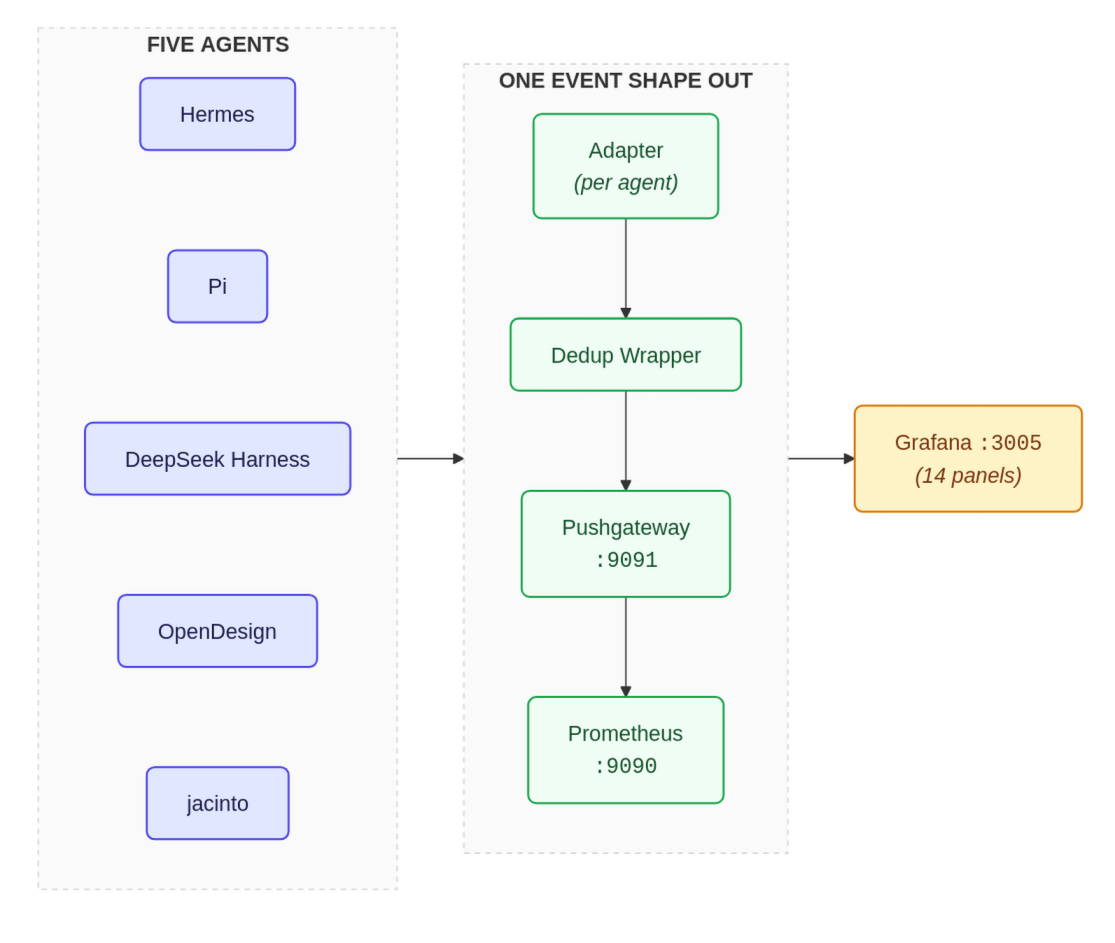
That arrangement is great for reliability and terrible for visibility. Five agents, five billing surfaces, five stores. The only way to know the fleet was healthy was to build the layer none of them ships: a metrics pipeline with one adapter per agent.
One adapter per agent, one event shape out
Each agent has a small adapter that reads its own store and emits normalized events. Everything downstream (a dedup wrapper, the Pushgateway, Prometheus, Grafana) only speaks this one shape:
# one adapter per agent, same event shape out
{
    "agent": "pi",            # who ran
    "session_id": "2026-08-21T…",
    "model": "deepseek-v4-flash",
    "tokens_in": 1200,
    "tokens_out": 340,
    "cost_usd": 0.0009,       # estimated, off-peak prices
    "task": "fix dedup bug",
}
A systemd timer wakes the sync every 15 minutes, runs the five adapters, and pushes totals to a Pushgateway. It is idempotent by design: a failed run spools its events and the next run drains them, so a crash never loses billing data.
The bugs the data caught
The dashboard is nice. The bugs it caught are the reason it exists. Three, all real, all invisible without metrics:
A trailing slash zeroed 158 sessions. Hermes recorded DeepSeek
usage with a base URL ending in https://api.deepseek.com/v1/; the
pricing matcher expected no slash. Those sessions had their tokens counted and
their cost silently set to zero. Not a crash, not an error: a quiet undercount.
The fix: a local price table in the adapter, applied to any row whose cost was
cleanly zero.
Dedup was eating real money. The wrapper deduplicates events on (agent, session, model), but the Hermes adapter emitted one event per (agent, session, model, provider, task). A session with both a priced row and an estimated row vanished whole: about $0.34 per sync, forever. The contract was ambiguous, so the pipeline lied in the least visible direction. Fix: one event per (session, model), merging rows, plus a contract test that asserts zero duplicates.
Prometheus itself overcounts resets. A poisoned snapshot once
pushed a $1,252 spike, and increase() reads any reset as spend: it
painted a fake $64 day. The correct "spend in this range" for a cumulative gauge
is a delta against the start of the range, clamped so resets can never invent
money:
sum by (agent) (
  clamp_min(
    agent_cost_usd_total - (agent_cost_usd_total offset $__range),
    0
  )
)
All three bugs share a moral. The agent is not lying; it has no intention at all. The pipeline is what lies, and only verification catches it.
What running this taught me
- Orchestration is a human job: not writing the code, but designing the system and verifying the output. Pi writes, I verify.
- Agent costs are real and they grow silently. Without a dashboard, "a few cents of API calls" becomes "I have no idea", and "I have no idea" is where money dies.
- Contracts beat trust. The dedup bug was not a code bug, it was a contract bug: the event shape was ambiguous and the pipeline resolved the ambiguity by losing money.
- Your metrics can lie too. A dashboard is a claim about the world, and claims need validation.
Measurement is the reliable choice
The engineering around your agents is the only part of the stack you actually own. The models will be replaced but the pipeline you build around them is what survives. If you run agents and you cannot tell me what they cost, you do not know your own stack.